Small daily actions that can have a big impact on your life!
It is no secret that for most people in life, they are looking to achieve happiness and a sense of personal satisfaction. How we achieve these things might look completely different to each person, but generally, it is a natural drive for human beings to look for more of these natural highs and to be drawn towards things or activities that offer them. We might be led to think that these would require grand actions. earning a large salary, winning the lottery, retiring early, travelling the world non-stop, changing the world. However, there are a number of small every day actions that we can do that can boost these positive feelings in life however we are living.
I’m sure that you are wondering what I am talking about and what small things can we do in our every day life that can improve our happiness/enrich our satisfaction long term? Below is a non-exhaustive introductory list of small actions that can dramatically improve our experiences in life, and their rationale explained further.
- Gratitude lists
 This is a small and simple way to have an overall boost in life. One aspect of our Western culture includes that we are conditioned to always look at what we haven’t got, rather than what we already have. Even if we reach a big personal milestone we have the tendency to look further or think about what is coming next or what our next move will be. This was a notion recognised by Carl Rogers, humanistic psychologist, where the human mind is constantly striving for better or more. While this is not a bad thing by any means, and can help us to achieve great things in life, it can sometimes draw us away from recognising how good our life already is, and how anything else can be a bonus.
Holding gratitude as an intentional action can bring richness and satisfaction into our daily experience, can help us feel more together and confident, and helps us to keep our life in perspective.
A good way to practise gratitude is to write ten things you’re grateful for in life over your morning cup of coffee, or at a time that suits you, but preferably at the start of your day. These can range from big to small things in your life that you hold gratitude for.
After a while, you might notice a pattern, with similar themes, e.g. ‘coffee’, and ‘family and friends’ comes up for me every day. If you find this happens, like I did, it could be helpful to write overall list to reflect on, e.g. things that are relatively stable or unchanging in life, and an individual daily list of gratitudes for the past 24 hours. Don’t panic if you can only do a main list to reflection on when you start, that’s okay; as you develop practise you will find that it gets much easier over time.
As time goes on and with regular practise, your brain will become primed to notice things to be grateful for so that it can add to the list. Don’t worry if your list contains seemingly mundane items, often these are simple things that we overlook and need to draw our attention to. When my car last went to the garage, I wrote ‘I can walk’ on my list. This is something we take for granted, not everyone is able to walk, it’s such an everyday thing, but if we were to lose it, we would realise how much of a privilege it is, how much we took it for granted.
2. Invigorating the five senses
Isn’t it amazing that we have senses? Sure, we only have five of them, and we don’t have sonar or other senses that sound very cool, but we have these channels by which we can experience this beautiful mystery that we call life and our perception of the world.
We can look at a sunrise/sunset and see many different colours, enjoying the beauty of a natural oil painting so difficult to recreate. On a summer’s day, we might be able to smell cut grass or ocean spray, and enjoy the fragrance of roses. We might find pleasure in listening to our favourite music, or most simply, enjoy the sound of the sea rumbling over pebbles as the tide comes in or out, or the sound of flowing water down a stream or babbling brook. Bringing attention to these helps to reconnect us with the moment and the world around us.
It’s so easy to get caught up in to-do-lists and schedules. Spending a moment paying attention to what we can see, hear, smell, taste and touch can help to bring us out of our heads and into the world, and hold joy for the fact that we can enjoy these things. This is what is known as mindfulness in its most simple form.
3. Quiet time/meditation
I hear a lot of people say they can’t meditate or get into meditation. I can understand this because I also once found it near impossible to do and would end up getting frustrated.
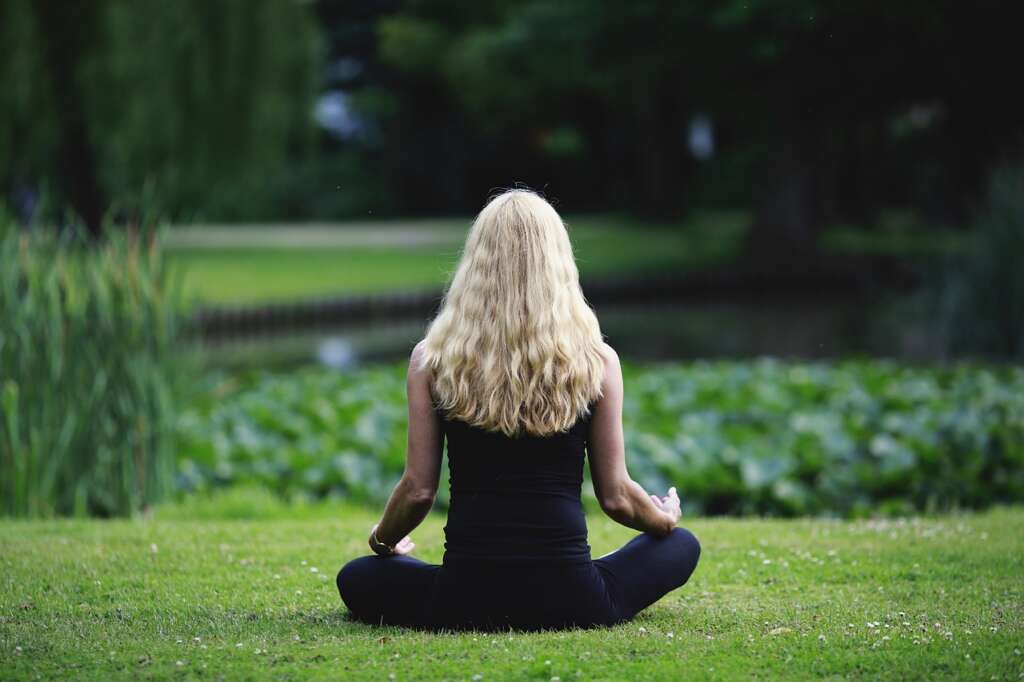
But it’s possible to get the benefits of meditation in other ways. Quiet time is a great way to do this. So, each morning, perhaps before or after your gratitude list, before you start the hectic commute, turn on the energy consuming news or log on to work, sit with quiet. If you find it hard to focus your mind pick a word to repeat in your mind. This could be ‘peace’, ‘relaxation’, or any other word that you feel fits. I’m sure some people reading this are thinking ‘No!’ Or ‘whats the point’/‘that sounds stupid’. But these are the exact people who will benefit from this the most.
4. Prayer/mantra/verbalising intentions
Whether you believe in God or not, this is a powerful experience. For those who do not believe in God, a God or Gods, speaking aloud asking for strength/peace/courage even if you feel it is just yourself you are talking to can be very powerful. This action helps to mentally acknowledging a need or something you hope to achieve with their day; there can be a lot of power in verbalising something and speaking outloud. Even stating ‘I will do x, y, z, today’ and setting a particular intention can be powerful, it is like making a verbal contract with yourself. In addition to speaking aloud, you might also consider writing these statements or intentions down for added focus and commitment.
5. Making plans with others ahead of time
Making plans with others and enjoying activities with people who enrich our soul is very good for us. This can be one of the most treasured of experiences for many. That said, as well as experiencing the actual event, we can also get a lot out of the time leading up to our plans. Sometimes, especially when considering a trip away, there is a lot to be taken from the build up to the event, possibly even more than the event itself. The ‘looking forwards’ helps to raise anticipation and enjoyment when it happens. So next time you intend on booking a holiday or time away, consider booking it for a little further in the future to give yourself some more time for anticipation and building excitement.
6. Reflecting at the end of the day
Similarly to setting an agenda in the morning it’s good to reflect in the evening and journalling can be a great way to do this. Some questions you might want to ask yourself include: was there anything that stood out for you today? Did anything go well, could something have gone better? Was there an event that helped you to feel good, was there an event that brought you to feel not so good? Was there anything to learn from?
These questions can help us wind down and gain more personal clarity. They can help us develop, realign our goals, values and purpose, bring self-awareness. When we make this a daily practise, we can give ourselves the benefit of making every day count in terms of self-development and growth. We can actually slow down to fully engage in the process and make daily decisions about where we would like to take our lives next.
7. Journalling
Journalling practise has a lot to offer. In addition for daily reflection, personal development and growth, it is also a place that we can ‘get things off our chest’. It can be a good way to gather the feelings of relief that we can get from talking to someone, when no one is around, with the privacy of speaking to a therapist (as long as we keep our writings safe and secure).
Journaling can be a great way to make sense of our thoughts, to help us find direction, keep on track, and reflect back where needed at the path we have planned vs how the territory is unfolding. Journaling can provide a sense of relief between therapy sessions, act as a reminder of content to bring to therapy or simply offer this without being in contact with a therapist. If you have never kept a journal, now could be your time to try; you might discover a new best friend in the process.
8. Finding what brings us joy and doing more of it
Through all of these combined processes outlined in this resource, we should be able to develop a decent list of actions, behaviours and activities that bring us more joy and good feelings, and engage with them more often.
If you have discovered anything that could be added to these daily actions or if you would like to share your thoughts, please contact us and let us know.